There’s something about summer that makes you want your home to feel lighter. Not necessarily different, not a full makeover, but just… easier. Airier.
Like your space finally matches the slower mornings, open windows, and longer evenings.
If you’ve ever looked around your home in June and thought, “Why does this still feel like winter?” you’re not alone. The good news is you don’t need to buy all new decor or start from scratch.
Summer decorating is less about replacing everything and more about shifting what you already have.
Once you understand that, it becomes a lot more fun—and a lot less overwhelming.
Start With Light, Not Stuff
Before you add anything new, pay attention to how your home feels during the day. Summer decorating really starts with light.
Pull back heavier curtains. If you have darker or lined panels, swapping them for something sheer or linen instantly changes the mood of a room. Even just opening blinds earlier in the day can make your space feel more intentional.
Mirrors help here too, especially in smaller spaces. Placing one across from a window can bounce natural light around the room in a way that feels subtle but noticeable. It’s one of those changes you don’t think about until you see it.
This is the kind of update that doesn’t cost anything, but makes everything else look better.
If you’ve already started seasonal decorating earlier in the year, this builds perfectly on your how to transition your home from winter to spring.
Bring in Natural Textures
When people think about summer decorations for home, they often jump straight to colors. But texture is what really makes a space feel seasonal.
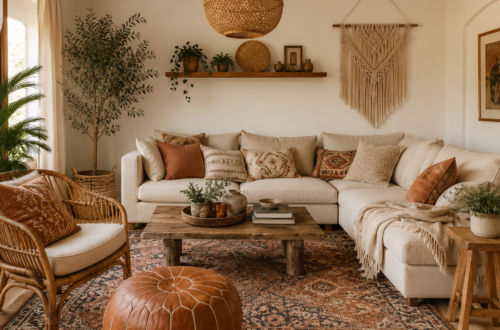
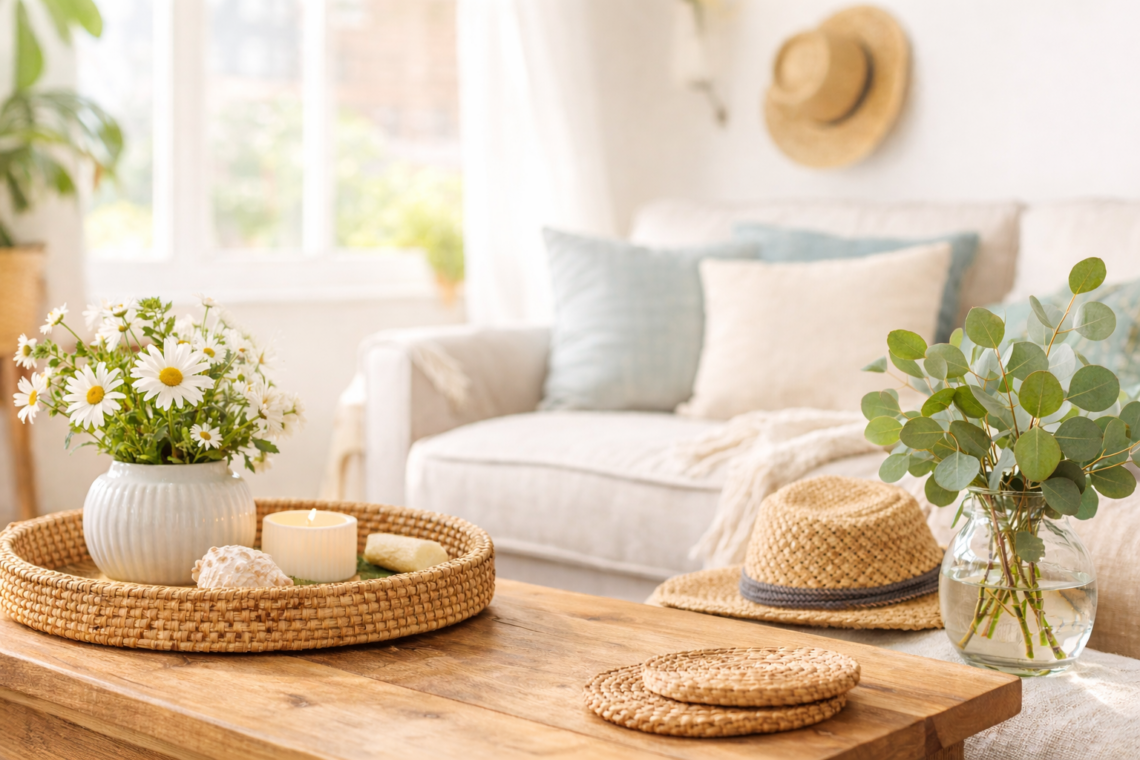
Think woven materials, light woods, soft cottons, and anything that feels slightly imperfect or organic. A basket in the corner, a rattan tray on your coffee table, or even switching to linen pillow covers can completely change the tone of a room.
You don’t need to go full coastal or beach-themed unless you love that look. The goal is just to soften the space and make it feel less heavy.
Even small swaps—like replacing a dark decorative tray with a lighter wood one—can make your home feel more aligned with the season.
Use Color Intentionally (and Sparingly)
Summer doesn’t have to mean bright, loud colors everywhere. In fact, some of the most elevated summer spaces use very little color at all.
If your home already leans neutral, keep that base and layer in soft tones like warm whites, sandy beige, pale blue, or muted greens. These shades feel calm and natural without overwhelming your space.
If you like a bit more color, introduce it in places that are easy to change out. Throw pillows, small decor pieces, or even a simple table runner can give you that seasonal feel without committing to anything permanent.
The key is restraint. A few well-placed pieces will always look more thoughtful than trying to make everything “match summer.”
Style Surfaces You Already Use
One of the easiest ways to decorate for summer is to rethink the surfaces you already interact with every day.
Your coffee table, kitchen counter, entry table—these are all places where a small change can make a big impact.
In smaller spaces, even subtle updates can make a big difference—especially when you’re working with small kitchen decor that already maximize your layout.
Try grouping a few simple items together instead of spreading things out. A stack of books with lighter covers, a small vase with fresh or faux greenery, and a candle in a neutral container can instantly make a space feel styled without looking staged.
In the kitchen, a bowl of lemons or limes adds both color and a lived-in feel. It’s simple, but it works every time.
Summer decorating doesn’t need to be complicated to feel intentional.
Bring the Outside In
This is probably the most classic tip, but it’s popular for a reason—it works.
Fresh flowers, branches, or even a few stems of greenery can completely change the feel of a room. And it doesn’t have to be anything elaborate. A handful of grocery store flowers in a simple vase can look just as beautiful as a full arrangement.
If you prefer something low maintenance, faux greenery has come a long way. Look for pieces with variation in color and shape so they don’t feel overly perfect.
Even adding a small plant to a bathroom or bedside table can make your home feel more connected to the season.
Swap Out Heavy Layers
This is one of those subtle changes that makes a huge difference.
Put away heavier throws, dark pillow covers, and anything that feels too cozy for warmer weather. Replace them with lighter fabrics—think cotton, linen, or even just fewer layers overall.
Your home should feel like it can breathe.
This doesn’t mean it has to feel empty. It just means giving your space a little more room.
If you’re focusing on refreshing your kitchen for summer, you’ll love these kitchen sink organization ideas that keep your space functional and clutter-free.
Don’t Forget Outdoor Spaces
If you have a balcony, patio, or even just a small outdoor corner, this is where summer decorating really shines.
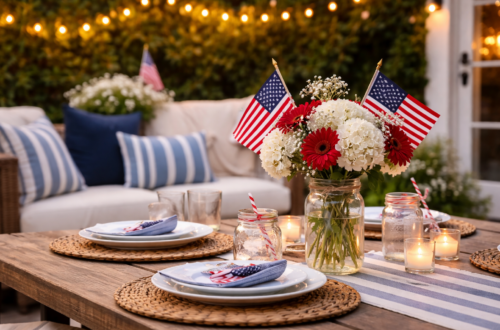
You don’t need a full setup to make it feel inviting. A couple of chairs, an outdoor rug, and soft lighting like string lights or lanterns can turn even a small space into something you actually want to use.
Adding a few cushions or a simple table makes it feel more like an extension of your home rather than an afterthought.
Even if you’re working with limited space, creating one area where you can sit and relax outside changes how you experience your home during the summer.
Keep It Personal
The best summer homes don’t look like a catalog. They feel lived in.
Leave a book out that you’re actually reading. Keep a throw casually draped over a chair. Let your space reflect real life instead of trying to make everything look perfectly styled.
That’s what makes a home feel inviting.
And honestly, that’s what people connect with most.
Final Thoughts
Decorating your home for summer isn’t about buying a whole new set of decor or following a strict style. It’s about making small, thoughtful changes that shift the way your space feels.
Lighten things up. Add a few natural textures. Bring in a bit of greenery. Let your home feel relaxed instead of overly styled.
Once you start thinking of summer decorating this way, it becomes less about “doing it right” and more about creating a space that actually feels good to live in.
And that’s always the goal.